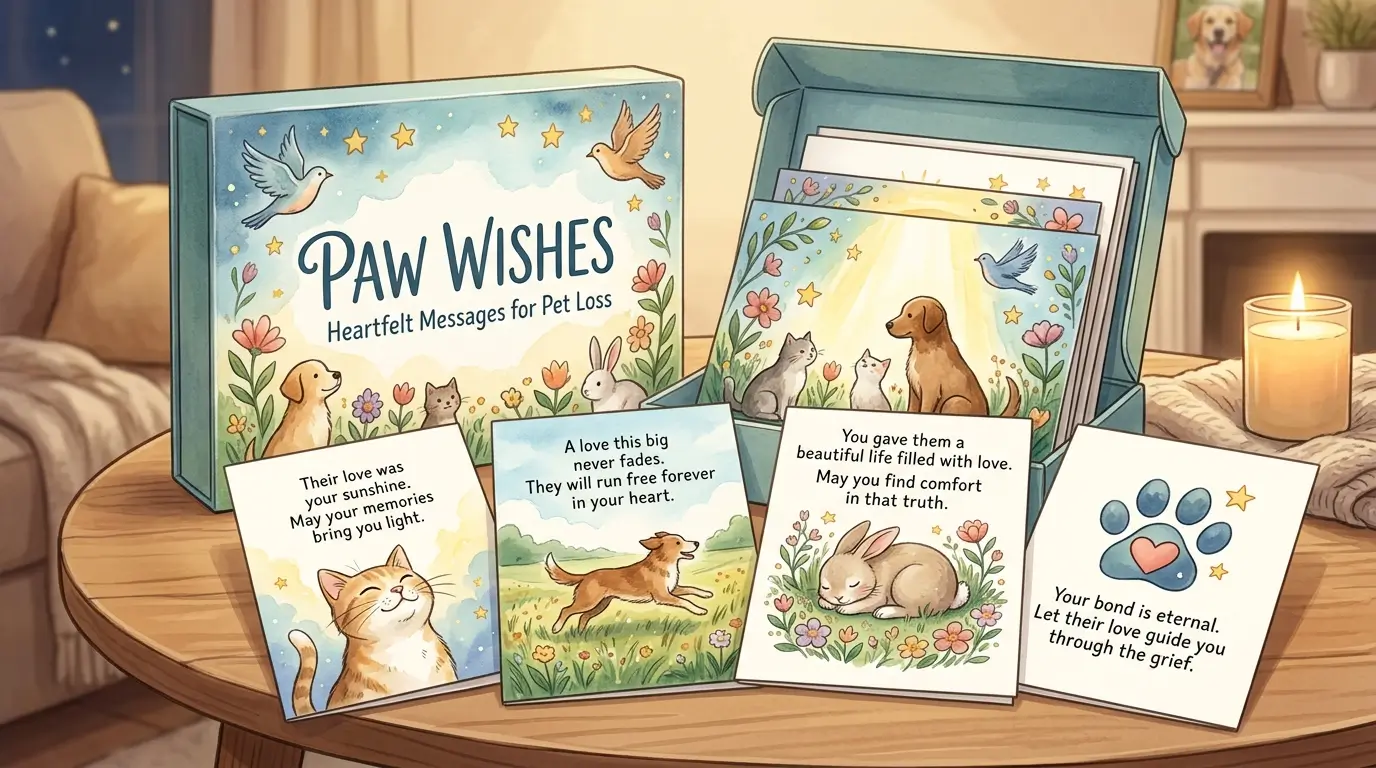
Losing a pet is one of the most quietly devastating things a person can go through. You come home and reach for a leash that isn’t needed anymore. You pour one extra bowl of food out of pure muscle memory. And when a friend’s pet passes, most of us stare at our phones wondering what on earth to say because “sorry for your loss” doesn’t seem anywhere near enough when what they lost was a heartbeat that met them at the door every single day.
That’s where paw wishes come in. These are the thoughtful, specific words, messages, captions, condolence notes, and tributes that honor a pet’s life in a way that actually lands. This guide will walk you through exactly what to say, when to say it, and how to make grieving pet owners in the USA feel genuinely seen and supported.
We’ll also take a quick but meaningful detour into an unexpected place: the Phasmophobia monkey, a ghost-hunting game entity that, surprisingly, has a lot to say about why humans form such powerful emotional bonds with animals and why that grief hits so hard.
What Are Paw Wishes — and Why Do They Matter So Much?
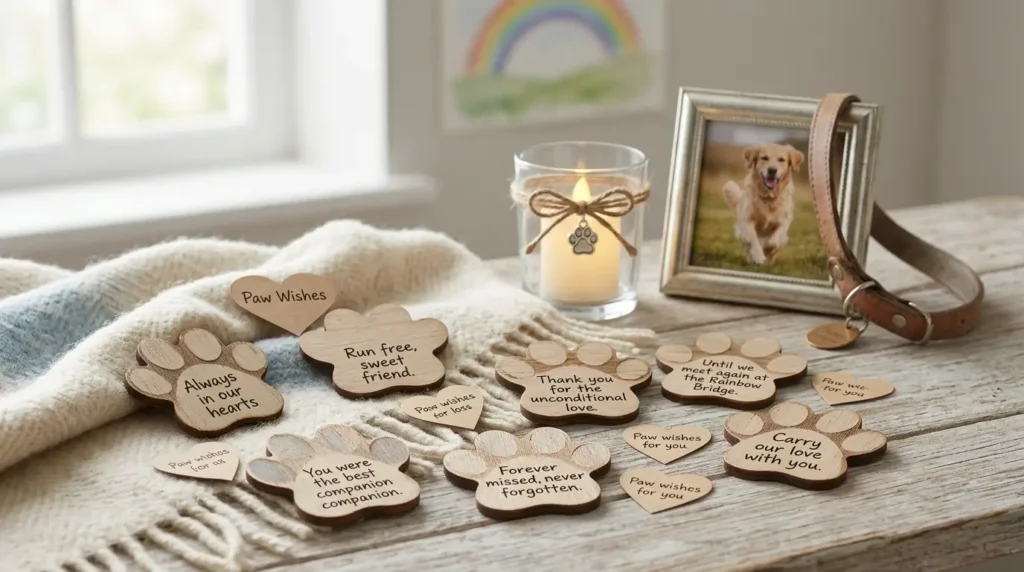
“Paw wishes” is a warm, community-born phrase that refers to heartfelt messages sent to someone who has lost a pet. Think of it as the animal-world equivalent of a sympathy card, but more personal and usually more honest about what that creature actually meant to the person.
Unlike human loss which comes with established rituals, bereavement leave, and culturally accepted grief, pet loss exists in a strange in-between space. In the United States, around 67% of households own a pet, and yet most workplaces don’t offer bereavement time for a dog or cat. Friends sometimes say the wrong thing (“it was just a dog”). Family members minimize it. The grief becomes something people carry quietly, which is exactly why a well-chosen paw wish can feel like someone finally turning the lights on in a dark room.
A meaningful paw wish does three things:
- It acknowledges the relationship not just “a pet died” but “YOUR companion, who knew you, is gone”
- It gives permission to grieve without timeline or apology
- It honors the animal specifically their personality, their quirks, their name
What to Write: Paw Wishes for Every Situation
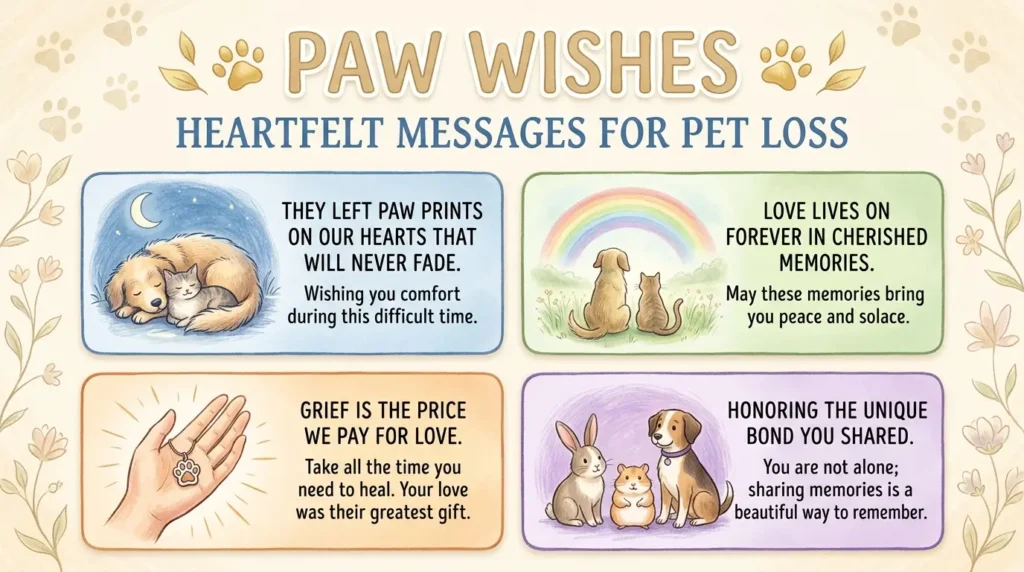
The right paw wish depends on your relationship with the grieving person and how well you know the pet. Here are real, usable messages organized by situation.
For the Loss of a Dog
Dogs occupy a particular space in American households — they’re schedule-setters, mood-readers, and in many cases the most consistent relationship a person has. When someone loses a dog, they’re losing a routine, a presence, and often a reason to get out of bed.
Short and simple:
- “The walks were just the beginning. [Name] gave you so much more than that. I’m so sorry.”
- ” Its knew you completely and loved you anyway. That’s the rarest gift.”
- “Sending love to you and to every memory still living in your house.”
For a card or longer note: “Losing [Name] is losing one of the few beings in your life who never asked anything complicated of you just your presence. That kind of love deserves real grief. I hope you let yourself feel all of it, and I’m here whenever you need company.”
For the Loss of a Cat
Cats are often misunderstood in grief culture. People joke that cats don’t care — but cat owners know the truth. That particular cat, your cat, had routines and preferences and a specific way of choosing you even when they had options.
- “Cats pick their people on purpose. You were chosen. That matters.”
- “The independence was part of who [Name] was but so was the way they always found you eventually.”
- “A quiet house is still full of everything [Name] left behind.”
For the Loss of a Small Pet — Birds, Rabbits, Guinea Pigs
This is where paw wishes matter most, because small pets receive the least social acknowledgment. People often assume the grief is smaller. It isn’t.
- “The size of a pet has nothing to do with the size of the hole they leave.”
- “[Name] had a whole personality. That doesn’t fit in a small box.”
- “I know people might not understand how much this hurts. I do.”
For a Child Who Lost a Pet
Children process pet loss differently, and the paw wishes you send (or help them craft for a friend) need to be honest without being overwhelming.
- “Your pet knew you loved them. Animals always know.”
- “It’s okay to cry. It’s okay to feel sad for a long time. Your feelings make sense.”
- “The memories are yours forever nobody can take those away.”
Paw Wishes on Social Media: Getting the Caption Right
In 2026, a lot of pet tributes will happen publicly on Instagram, Facebook, and TikTok. Writing a caption for a friend’s memorial post or your own requires a slightly different touch. It needs to work visually alongside a photo and hit quickly.
Strong memorial caption formulas:
- Name + one true thing: “Biscuit, who never once had a bad day and made sure we knew it. 2014–2026.”
- The specific detail: “She always slept on the left side of the couch. That spot still has a dent in it.”
- Permission to grieve publicly: “You made my life so much bigger. Thank you for choosing me.”
Avoid generic phrases like “Gone but not forgotten” or “Rainbow Bridge” unless the person specifically connects with those they can feel like filler to someone in real pain. Specific is always more powerful than poetic when grief is fresh.
The Phasmophobia Monkey — And What It Teaches Us About Animal-Human Bonds

Here’s the detour that’s actually a shortcut to understanding something important.
Phasmophobia is a wildly popular ghost-hunting horror game developed by Kinetic Games, where players investigate haunted locations and attempt to identify ghost types using evidence. Among the many tools and ghost behaviors in the game, the monkey paw, not a monkey ghost, but the iconic cursed object plays a fascinating psychological role.
The monkey paw in Phasmophobia grants wishes. Three of them. But each wish comes with a terrible cost. Ask for your teammate back: a new ghost spawns. Ask to survive: the lights go out. The mechanic is a direct reference to W.W. Jacobs’ 1902 horror story “The Monkey’s Paw,” where a grieving couple uses a supernatural object to wish their dead son back with horrifying results.
So what does this have to do with paw wishes and pet loss?
More than you’d think.
The monkey paw story and its Phasmophobia revival taps into a very specific human wound: the desperate wish to undo a loss. If only they had caught the illness earlier, gotten one more day, or kept them from going outside that night. Pet owners know this feeling intimately. The what ifs can be as haunting as any ghost in a game.
Understanding that impulse, the monkey paw impulse helps explain why paw wishes that acknowledge reality land so much harder than ones that reach for comfort too quickly. Saying “they’re in a better place” can feel hollow. Saying “I know you’d give anything for one more morning with them” acknowledges the real grief, the monkey paw thought, the wish that can’t be granted and that kind of honesty is what actually helps people heal.
In the game community, the monkey paw has become a symbol for careful wishing, the danger of desperation, and the idea that some losses can’t be undone. Pet owners, consciously or not, understand this completely.
What Not to Say — The Paw Wishes That Miss the Mark
Good intentions with poor execution can make grief worse. Here’s what to avoid, and why.
“At least they had a good life.” This immediately moves the conversation toward silver linings when the person isn’t ready. It’s a way of closing down grief rather than making space for it.
“You can always get another one.” Pets are not interchangeable. This is one of the most commonly cited hurtful phrases in pet loss communities across the USA. Never say it.
“I know how you feel.” Unless you’ve lost a pet with a similar relationship, this can feel dismissive. Better: “I can only imagine how much this hurts.”
“They’re at the Rainbow Bridge now.” This is meaningful to some people and a cliché to others. Read the room. If you don’t know whether they connect with religious or spiritual language, leave it out.
Silence. This one is underrated as a mistake. Many people say nothing because they don’t know what to say but the person grieving often interprets this as their loss not mattering. Saying something imperfect is almost always better than saying nothing.
How to Support Someone Through Pet Loss (Beyond the Message)
Words are the start, but actions carry paw wishes into the real world.
In the first week:
- Drop off food. Grief disrupts cooking and eating routines.
- Offer to go through the pet’s things with them or to handle it entirely if they can’t face it yet.
- Check in two or three weeks later, when the initial condolences have faded but the grief hasn’t.
Longer-term support:
- Share a memory of the pet if you knew them. “I always think about the time [Name] did X” keeps the animal’s personality alive.
- Acknowledge difficult dates: the pet’s birthday, the anniversary of their passing, the first holiday without them.
- In the USA, several organizations including the Association for Pet Loss and Bereavement (APLB) offer free support groups and counseling for pet owners. Mention these gently if someone seems to be really struggling.
For children:
- Don’t rush to replace the pet. Let them grieve first.
- Create a small memorial together with a photo album, a garden stone, a dedicated playlist. Ritual helps children process.
- Read books about pet loss together. There are excellent ones written for every age group.
FAQ: Paw Wishes and Pet Loss
What do you say to someone who lost a pet? Keep it specific and honest. Acknowledge the relationship directly use the pet’s name, mention something real about them if you can. Avoid rushing to comfort and instead make space for the grief. Something like “I know how much [Name] meant to you, and I’m so sorry you’re going through this” is simple, warm, and genuinely helpful.
What is the monkey paw in Phasmophobia? In Phasmophobia, the monkey paw is a cursed item that grants the player three wishes, each with a negative consequence. It references the classic horror story “The Monkey’s Paw” by W.W. Jacobs, which explores the dangers of wishing to reverse death. In the game, it’s a high-risk, high-reward mechanic that has become a favorite among content creators for its dramatic tension.
How long does pet grief typically last? There’s no fixed timeline. Research and clinical experience suggest acute grief often lasts weeks to a few months, but many pet owners report a persistent low-level sadness for a year or longer — especially around anniversaries or during life transitions. This is normal and doesn’t mean something is wrong with you.
Is pet grief taken seriously in the USA? Increasingly, yes. A growing number of therapists specialize in pet loss, pet bereavement counselors are becoming more common, and some employers are beginning to offer informal “pawternity” or pet bereavement accommodations. Cultural attitudes are shifting, especially among younger generations who view pets as full family members.
What are some meaningful ways to memorialize a pet? Popular options in the USA include custom portrait commissions, paw print keepsakes, memorial gardens with engraved stones, donations to a shelter in the pet’s name, or having a small private ceremony. Digital memorials — a dedicated Instagram highlight or a short video montage — are increasingly common and allow a wider community to contribute memories and paw wishes.
Closing Thoughts
Paw wishes aren’t about finding the perfect words, they’re about showing up with honesty when someone is carrying a grief that the world often doesn’t make room for. Whether you’re writing a message for a friend, composing a social media tribute, or just trying to understand your own loss better, the most important thing is specificity and presence.
The monkey paw, whether in a century-old horror story or a modern ghost-hunting game — reminds us that some losses cut deep precisely because the bond was real. Pet owners don’t need to explain or justify that. The right paw wish simply says: I see what you had. I see what you lost. And I’m here.
If you found this helpful, consider exploring related guides on pet memorial ideas, how to talk to children about pet death, or finding pet loss support groups in your area. And if someone you know is grieving right now go ahead and send that message. The imperfect, heartfelt one is infinitely better than waiting for perfection.

About Sajjad Ahmed
Sajjad Ahmed is a greeting-message researcher and content writer at WishMiz, specializing in birthday wishes, holiday greetings, relationship messages and meaningful words for important life occasions.
His work focuses on creating original, natural and easy-to-personalize messages that readers can confidently use in cards, text messages, social media posts and personal notes. He carefully considers the recipient, relationship, occasion and emotional tone to ensure each message feels relevant rather than generic or repetitive.
Before publication, Sajjad reviews his content for clarity, originality, accuracy, readability and duplication. He also studies how people communicate during different celebrations and life events to create message collections that are practical, inclusive and emotionally appropriate.
Through WishMiz, his goal is to help readers find the right words when they want to celebrate, encourage, appreciate, comfort or reconnect with someone important.
Areas of Expertise
Birthday and milestone wishes
Holiday and seasonal greetings
Friendship and relationship messages
Congratulations and appreciation notes
Farewell, sympathy and support messages
Social media captions and card wording
Message research, editing and personalization
Editorial Approach
Every article written by Sajjad Ahmed is developed with an emphasis on originality, usefulness and human connection. Messages are organized by relationship, tone and situation so readers can quickly find wording that suits their needs. Content is reviewed and updated when necessary to maintain its quality, relevance and readability.